Situations like this happen more often than people think. A child suddenly feels unwell and within seconds a sofa, carpet, rug, or mattress can become contaminated with vomit. Many homeowners (Wirral location) immediately search online or ask for advice in local Facebook groups, hoping to find a quick solution.
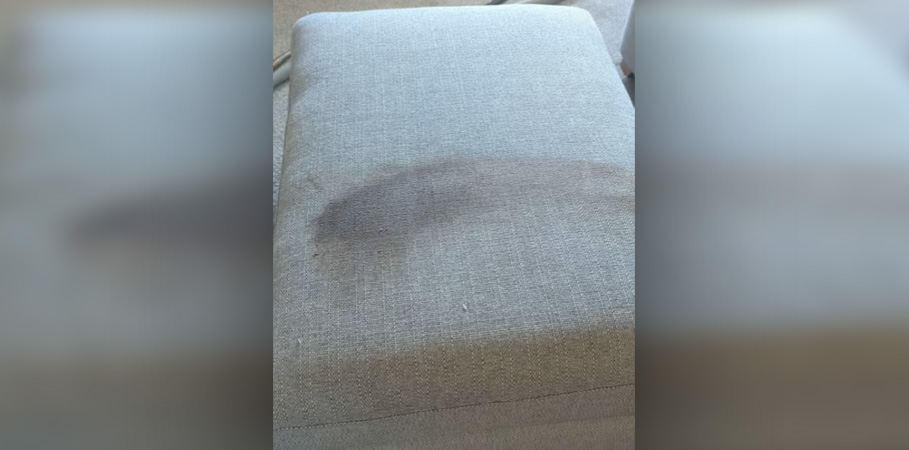
Recently, a local post showed exactly this situation. A parent asked for help after a child had been sick on an expensive brushed cotton sofa. The vomit had soaked through a protective throw and into the upholstery fabric beneath.
Within minutes the comments filled with suggestions such as hydrogen peroxide, shaving foam, dish soap, steam cleaning, and hiring a Rug Doctor machine.
Although these ideas may sound helpful, many of them can actually make the problem worse.
This is where proper vomit stain removal from sofa upholstery becomes important. The same principles also apply when contamination affects carpets, rugs, or mattresses, as vomit quickly penetrates deep into soft materials.
Why Vomit Contamination Is Difficult to Remove
Vomit is not just a surface stain. It contains stomach acids, food pigments, bacteria, and digestive enzymes. These components can penetrate quickly into fibres and materials such as upholstery fabric, carpet pile, rugs, and mattress padding.
When contamination reaches deeper layers, simple surface cleaning rarely removes it completely. The stain may appear lighter at first, but odours and residues often remain inside the material.
As the surface dries, the smell can return because bacteria are still present within the fibres or padding.
This is why vomit stain removal from sofa upholstery requires careful treatment. The same challenge occurs with carpets, rugs, and mattresses, where contamination can spread below the visible surface.
Vomit contamination is often treated as a simple stain problem, but in reality it is a form of biological contamination. We previously explained this in more detail in our article about DIY cleaning and biohazards: https://www.carpetprocleaning.co.uk/why-diy-carpet-cleaning-is-not-suitable-for-biohazard-contamination/ In that article we explain how bodily fluids such as vomit, urine, and blood can penetrate carpet fibres and upholstery materials much deeper than most people realise.
Common DIY Advice That Can Damage Upholstery
Many online suggestions are well intentioned but risky, particularly on delicate upholstery fabrics like brushed cotton.
Hydrogen peroxide
Hydrogen peroxide can act as a bleaching agent. While it may remove some organic stains, it can also lighten or permanently damage coloured fabrics.
Dishwashing liquid
Fairy liquid or other dish soaps may break down grease temporarily but often leave detergent residues inside the fabric. These residues attract dirt and can cause sticky patches later.
Shaving foam
Some people recommend shaving foam because it contains mild detergents. However, it is not designed for upholstery cleaning and often leaves residues and fragrance chemicals trapped in the fabric.
Steamers
Domestic steamers can push contamination deeper into upholstery, carpets, rugs, or mattress padding. Heat can also set certain stains permanently.
Rental carpet cleaning machines
Machines such as Rug Doctor are designed mainly for carpets. When used on upholstery, rugs, or mattresses they can easily overwet the material, which increases the risk of odours and water marks.
These approaches may improve appearance briefly but rarely solve the underlying contamination.
What To Do Immediately Before Professional Cleaning
If a sofa, carpet, rug, or mattress becomes contaminated with vomit, quick action can reduce the severity of the stain.
First remove any solid material carefully without rubbing it deeper into the fibres.
Next gently blot the area with a clean damp cloth or paper towels. The goal is to absorb moisture rather than spread the contamination.
Avoid scrubbing the material. Rubbing can push the stain deeper into fibres or padding.
It is also best to avoid applying random chemicals. Mixing different household cleaners can cause colour damage or chemical reactions.
Ventilating the room can help reduce odours while waiting for proper cleaning.
These simple steps can make professional vomit stain removal from sofa upholstery or carpets more effective.
How Professional Vomit Stain Removal from Sofa Upholstery Works
Professional cleaning treats this type of contamination very differently from DIY cleaning.
The process usually includes specialised enzyme treatments designed to break down organic material such as vomit, food residues, and bacteria.
After the enzymes have time to work, controlled hot water extraction removes the contamination from deep within fibres and materials.
This process works not only for sofas but also for carpets, rugs, and mattresses, where contamination can spread below the surface.
Professional equipment also provides strong extraction power, helping to remove moisture quickly and reduce the risk of lingering odours.
The goal is not only to improve the appearance but also to restore hygiene and remove odour at the source.
Professional Vomit Stain Removal from Sofa Upholstery on the Wirral
Accidents happen in every home, especially where children or pets are present. When contamination reaches deep into upholstery, carpets, rugs, or mattresses, professional treatment often provides the safest and most effective solution.
If your sofa or chair needs professional treatment, you can learn more about our upholstery cleaning services here:
https://www.carpetprocleaning.co.uk/upholstery-and-car-interiors-cleaning/
You can also book a professional cleaning appointment here:
https://www.carpetprocleaning.co.uk/booking/
At CarpetProCleaning we regularly deal with vomit stain removal from sofa upholstery and carpets on the Wirral and surrounding areas including Wallasey, New Brighton, Liscard, Seacombe, Moreton, Leasowe, Birkenhead, Greasby, Upton, Bebington, Bromborough, Heswall, Hoylake, West Kirby, Prenton, and Oxton.