DIY carpet cleaning is often seen as a quick and cost-effective solution for stains, spills, and everyday dirt. In many situations, DIY cleaning can offer limited, short-term improvement. However, when carpets become contaminated with bodily waste, blood, or other biological material, the situation changes completely. Biohazard contamination presents hygiene and health risks that standard DIY carpet cleaning methods are not designed to handle. In these cases, incorrect cleaning can leave carpets unsafe, cause odours to return, and increase the risk of cross-contamination.
Why This Article Takes a Different View on DIY Carpet Cleaning
We have previously written several articles covering DIY carpet cleaning and how it compares to professional services, including:
- How to Clean a Wool Carpet at Home?
https://www.carpetprocleaning.co.uk/how-to-clean-a-wool-carpet-at-home/ - DIY Carpet Cleaning vs. Professional Services: Which Is Better?
https://www.carpetprocleaning.co.uk/diy-carpet-cleaning-vs-professional-services-which-is-better/ - That Was Horrible! Carpet Cleaned With DIY Equipment
https://www.carpetprocleaning.co.uk/that-was-horrible-carpet-cleaned-with-diy-equipment/ - Machine Rental vs Professional Carpet Cleaning
https://www.carpetprocleaning.co.uk/diy-carpet-cleaning-vs-professional-carpet-cleaning-services/
Those articles focus on everyday carpet cleaning, general DIY use, and the limitations of rental equipment in normal domestic situations.
However, a recent biohazard carpet cleaning job led us to publish a separate article titled Biohazard Carpet Cleaning in Wallasey and Across the Wirral:
https://www.carpetprocleaning.co.uk/biohazard-carpet-cleaning-in-wallasey-and-across-the-wirral/
That experience highlighted a more serious concern. It became clear that some people attempt to use DIY rental equipment to clean carpets after biohazard incidents involving bodily waste. This creates very different hygiene and contamination risks compared to normal DIY carpet cleaning.
For this reason, this article focuses specifically on DIY carpet cleaning from a biohazard perspective, which is rarely addressed in standard DIY advice.
How Biohazard Contamination Behaves in Carpets
Unlike surface dirt, biohazard materials absorb rapidly into carpet fibres, backing, and underlay. As a result, contamination spreads below the visible surface very quickly.
Common biohazard contaminants include:
- Faeces
- Vomit
- Urine contamination
- Blood
- Other bodily fluids
Because of this deep absorption, cleaning the surface alone does not remove the underlying contamination or hygiene risk.
The Limitations of DIY Biohazard Cleaning
After a biohazard incident, some people attempt DIY carpet cleaning using household products or hired machines. While this may improve appearance temporarily, it rarely resolves the problem properly.
DIY biohazard cleaning often:
- Pushes contamination deeper into the carpet structure
- Fails to remove bacteria from the backing and underlay
- Causes odours to disappear briefly and then return
- Spreads contamination across a wider area
As a result, carpets may look cleaner while remaining unhygienic.
Rental Carpet Cleaning Machines and Hygiene Concerns
Rental carpet cleaning machines are designed for general domestic cleaning, such as everyday dirt, spills, and pet-related issues. They are widely available and easy to hire.
However, biohazard contamination requires a much higher level of hygiene control.
There is no publicly available information confirming that shared rental machines are fully sanitised or decontaminated between every hire. While users are typically expected to return machines in a clean condition, customers have no visibility into:
- How the machine was used previously
- Whether it was exposed to biological contamination
- How thoroughly internal components were cleaned
- When it was last sanitised
In addition, rotating brushes and internal housings can trap organic material, which increases the risk of spreading contamination rather than removing it.
Machines such as Rug Doctor can be useful for general cleaning tasks, but they are not designed for biohazard carpet cleaning.
Cross-Contamination Risks With Improperly Cleaned Equipment
Another concern with DIY biohazard carpet cleaning is the risk of cross-contamination through cleaning equipment.
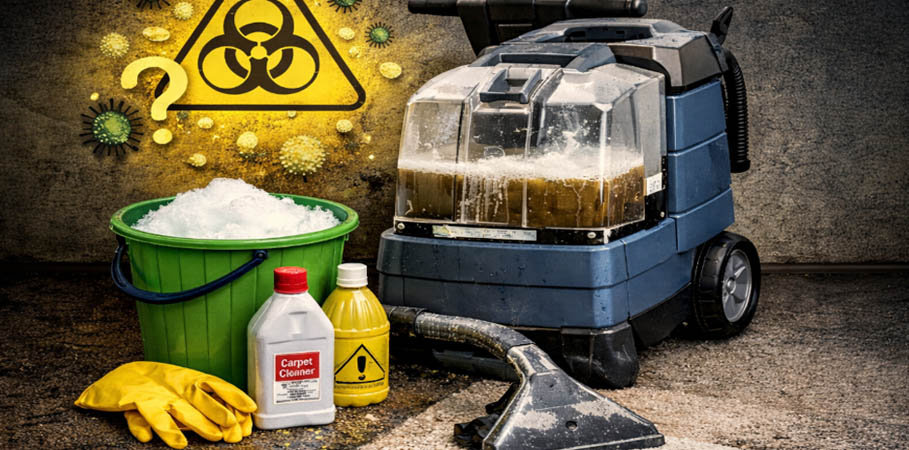
When a machine is used in a biohazard situation, biological material can enter brushes, housings, hoses, and internal components. If that equipment is not thoroughly decontaminated afterwards, contamination may remain inside the machine.
With shared rental machines, users have no visibility into how the equipment was used previously or how thoroughly internal components were cleaned before the next hire. As a result:
- There is a potential risk of contamination remaining inside the machine
- Hygiene control between users cannot be verified
- Equipment may not be suitable for use after biohazard incidents
For this reason, professional biohazard carpet cleaning places strong emphasis on equipment hygiene and controlled handling.
Why Pet Cleaning Products Are Not Suitable for Biohazards
Many DIY carpet cleaning chemicals are marketed for homes with pets. These products focus on odour control and visible staining.
However, pet-related cleaning and biohazard carpet cleaning are not the same.
Pet cleaning products are not designed to:
- Decontaminate carpets after human biohazard incidents
- Remove bacteria from deep within carpet fibres and underlay
- Control cross-contamination risks
- Meet hygiene expectations in care, childcare, or commercial environments
Using pet-focused products in biohazard situations can create a false sense of cleanliness while contamination remains present.
Why Professional Biohazard Carpet Cleaning Is Different
Professional biohazard carpet cleaning treats contamination as a hygiene and safety issue rather than a cosmetic one.
Professional cleaners:
- Use specialist bio-enzymatic and sanitising treatments
- Apply deep extraction methods to remove contamination at source
- Clean and decontaminate equipment between every job
- Follow controlled procedures to reduce cross-contamination
This professional approach protects both the property and the people who use it.
When Professional Biohazard Cleaning Is Essential
If a carpet has been contaminated with bodily waste or other biological material, professional biohazard carpet cleaning is strongly recommended. Early professional treatment improves results and increases the chance of saving the carpet.
In many cases, professional cleaning can restore hygiene and avoid the cost and disruption of carpet replacement.
Frequently Asked Questions About DIY Biohazard Carpet Cleaning
Can I clean biohazard contamination from carpets myself?
In most cases, DIY carpet cleaning is not suitable for biohazard contamination. Bodily waste and other biological materials absorb deep into carpet fibres, backing, and underlay, which DIY methods do not clean effectively.
Are rental carpet cleaning machines safe for biohazard cleaning?
Rental machines are designed for general domestic use. There is no public confirmation that shared machines are fully sanitised between hires, which makes them unsuitable for biohazard carpet cleaning.
Why do smells often return after DIY cleaning?
DIY cleaning can remove surface odours temporarily while pushing contamination deeper into the carpet. As the carpet dries, remaining bacteria can reactivate and cause smells to return.
When should I call a professional biohazard carpet cleaner?
You should contact a professional when carpets are contaminated with faeces, blood, vomit, urine, or other bodily fluids. Prompt professional treatment improves hygiene and safety.